




| SNo. | Scientific Name | Locality | Habitat | Basis of Record | Description | Recorded By | Record Number | Island | Source | Date |
|---|---|---|---|---|---|---|---|---|---|---|
| 1 | Volkameria glabra | Haena, along hwy just west of Haena beach park | Lowland mesic to wet secondary forest and roadside vegetation with some nearby residential areas. | Preserved_Specimen | Tree to about 10 feet tall, sparsely branched, fruiting. | OED | 2010030903 | Kauai | BISH | 2010-03-09 |
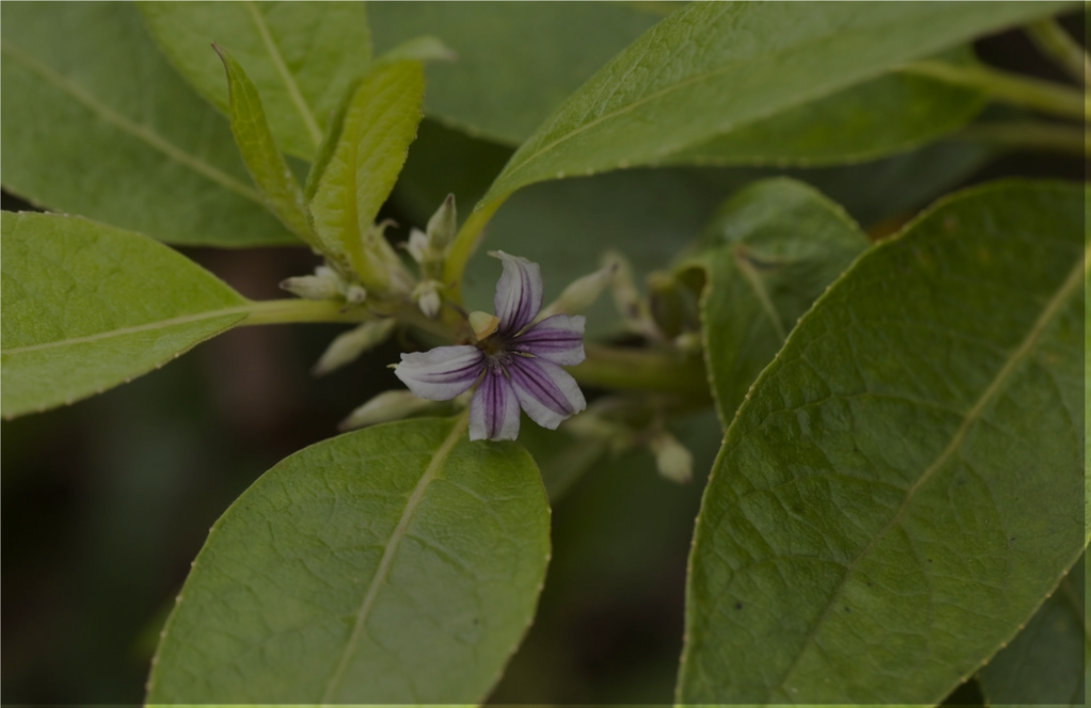
| 2 | Volkameria glabra | Wahiawa Botanic Garden | partially shaded | Preserved_Specimen | tree 8 m, branched at the base. Flowers white with a lime green tinge: moderately fragrant (morning) | Lau, J. | 2540 | Oahu | BISH | 1986-06-18 |
| 3 | Volkameria glabra | immediately behind beach, Kee | trailside | Preserved_Specimen | Shrub ~1.5 m tall. Young twigs pale green with large lenticels. Leaves rather pale green; petioles glossy with large white lenticels; blade above glossy with midrib pale, below less glossy. Flowers 12 x 14 mm, with strong, nutty fragrance; calyx pale green becoming almost white at tips of sepals; corolla white, crystalline, the tube tinged greenish; stamens to 1 cm, amther pale violet-brown with yellow vein, filament white tinged purple near apex; pistil 6 mm, white becoming green at tip. Immature fruits pale to milky green, very glossy. | Hume, L. | 353 | Kauai | BISH | 1988-09-17 |
| 4 | Volkameria glabra | near restroom facility at Haena State Park | Casuarina-Terminalia grove along shoreline | Preserved_Specimen | Tree 10', flowers white, scentless (at least in afternoon) | Nagata, K.M. | 3855 | Kauai | BISH | 1988-05-28 |
| 5 | Volkameria glabra | across Lihue sugar mill, off of Kaumuali'I Hwy, on SW side of lower Hoomana Rd. | w/ Macaranga tanarius, Epipermnum, and Noronhia emarginata | Preserved_Specimen | Large shrub sprawling on roadside. Dk green leaves. White fleshy fruit drying brown | Tangalin, N. | 1597 | Kauai | BISH | 2007-10-02 |
| 6 | Volkameria glabra | Honolulu, Moiliili, behind the Stadium, by nursery | Preserved_Specimen | Tree 15', 6 diam.; fls. white, fragrant; fr. white | Suehiro, A. | Oahu | BISH | 1939-08-04 | ||
| 7 | Volkameria glabra | Wahiawa | Preserved_Specimen | Pearsall, G.A. | Oahu | BISH | 1954-09-20 | |||
| 8 | Volkameria glabra | Exp't Sta. HSPA, Honolulu | Preserved_Specimen | Caum, E.L. | Oahu | BISH | 1932-06-11 | |||
| 9 | Volkameria glabra | Experiment Station | Preserved_Specimen | Isenberg | Kauai | BISH | 1942-06-19 |
Lorem ipsum dolor sit amet, consectetur adipiscing elit, sed do eiusmod tempor incididunt ut labore et dolore magna aliqua. Ut enim ad minim veniam, quis nostrud exercitation ullamco laboris nisi ut aliquip ex ea commodo consequat. Duis aute irure dolor in reprehenderit in voluptate velit esse cillum dolore eu fugiat nulla pariatur. Excepteur sint occaecat cupidatat non proident, sunt in culpa qui officia deserunt mollit anim id est laborum.
Lorem ipsum dolor sit amet, consectetur adipiscing elit, sed do eiusmod tempor incididunt ut labore et dolore magna aliqua. Ut enim ad minim veniam, quis nostrud exercitation ullamco laboris nisi ut aliquip ex ea commodo consequat. Duis aute irure dolor in reprehenderit in voluptate velit esse cillum dolore eu fugiat nulla pariatur. Excepteur sint occaecat cupidatat non proident, sunt in culpa qui officia deserunt mollit anim id est laborum.
Lorem ipsum dolor sit amet, consectetur adipiscing elit, sed do eiusmod tempor incididunt ut labore et dolore magna aliqua. Ut enim ad minim veniam, quis nostrud exercitation ullamco laboris nisi ut aliquip ex ea commodo consequat. Duis aute irure dolor in reprehenderit in voluptate velit esse cillum dolore eu fugiat nulla pariatur. Excepteur sint occaecat cupidatat non proident, sunt in culpa qui officia deserunt mollit anim id est laborum.
Lorem ipsum dolor sit amet, consectetur adipiscing elit, sed do eiusmod tempor incididunt ut labore et dolore magna aliqua. Ut enim ad minim veniam, quis nostrud exercitation ullamco laboris nisi ut aliquip ex ea commodo consequat. Duis aute irure dolor in reprehenderit in voluptate velit esse cillum dolore eu fugiat nulla pariatur. Excepteur sint occaecat cupidatat non proident, sunt in culpa qui officia deserunt mollit anim id est laborum.
Lorem ipsum dolor sit amet, consectetur adipiscing elit, sed do eiusmod tempor incididunt ut labore et dolore magna aliqua. Ut enim ad minim veniam, quis nostrud exercitation ullamco laboris nisi ut aliquip ex ea commodo consequat. Duis aute irure dolor in reprehenderit in voluptate velit esse cillum dolore eu fugiat nulla pariatur. Excepteur sint occaecat cupidatat non proident, sunt in culpa qui officia deserunt mollit anim id est laborum.
Lorem ipsum dolor sit amet, consectetur adipiscing elit, sed do eiusmod tempor incididunt ut labore et dolore magna aliqua. Ut enim ad minim veniam, quis nostrud exercitation ullamco laboris nisi ut aliquip ex ea commodo consequat. Duis aute irure dolor in reprehenderit in voluptate velit esse cillum dolore eu fugiat nulla pariatur. Excepteur sint occaecat cupidatat non proident, sunt in culpa qui officia deserunt mollit anim id est laborum.
Thank you for your interest in submitting an image of
Select your image and leave a brief description of your photo below.